
Part 1 | Part 2 | Part 3 | Part 4 | Part 5
Part 2: Design for Recycling and Circularity
Week 3

Introduction to Design Thinking and Part 2
In this section we introduce Part 2, design thinking, and give you an example of how design and systems thinking can be useful problem solving tool.
2.1 Introduction to Part 2: Design for Recycling and Circularity
2.2 Design Thinking and Design Theory
2.3 Systems Thinking and Problem Solving

Design Theories, Methods and Principles: Industry
This section focuses three different design frameworks and tools for measuring impacts. These design methods are in many cases complementary and easy to combine in any circularity work.
2.4 Design for Recycling: Reducing Waste on the Drawing Board
2.5 Cradle to Cradle: Design for Circularity
2.6 Life Cycle Assessment: Calculating Product Footprints

Design Theories, Methods and Principles: Nature
This section highlights three nature-based design frameworks and concepts. Like the three examples above they can be combined into a creative and robust design approach for circularity.
2.7 Biomimicry: Design Guided by Nature
2.8 Biophilic Design: Connecting Human Built Spaces to Nature
2.9 Permaculture Design: Creating Sustainable Human Habitats

End of the Week Assignment
The assignment lets you explore and investigate a specific topic and place from a circularity perspective. This week’s assignment focuses on re-designing a built object, place or larger system.
2.10 Circular Re-Design: Applying Design Principles
Week 4

Design Case Studies: Consumer Products
In this section you’ll learn more about three contemporary, but very different objects that have the potiential to be redesigned into more circular and sustainable consumer products.
2.11 The Bicycle: Repairable Mobility
2.12 The T-shirt: Emotionally Durable Clothing
2.13 The Smartphone: Long-lasting Communication
Design Case Studies: Built Structures
In this section we look closer at case studies focused on creative building designs, philosophies and techniques, from different places and historical times.
2.14 Contemporary Wood Buildings: Botanikern in Uppsala
2.15 Organic Architecture: Frank Lloyd Wright’s Fallingwater
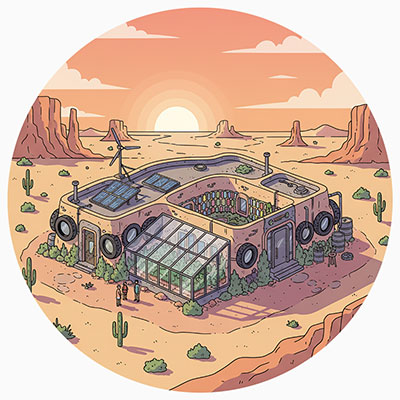
2.16 Earthship Biotecture: Homes Made from Waste Materials

Design Case Studies: Land and Lived Spaces
In this section we will explore land and lived spaces, critical design for resilience connected to climate, nature-based solutions, urban agriculture and food waste strategies, and how Scandinavian fishing nets saves lives in Ukraine.
2.17 Design for Resilience: Climate Adaptation and Nature-based Solutions
2.18 Food Systems and Spaces: Campus Garden Uppsala University and Bruised Food Club
2.19 Design That Saves Lives: Reused Fishing Nets Protecting Frontline Roads in Ukraine
End of the Week Assignment
The assignment lets you explore and investigate a specific topic and place from a circularity perspective. This week we will focus on you creating your own design case study.