
Part 1 | Part 2 | Part 3 | Part 4 | Part 5
Part 4: Substitution with Sustainable Alternatives
Week 7
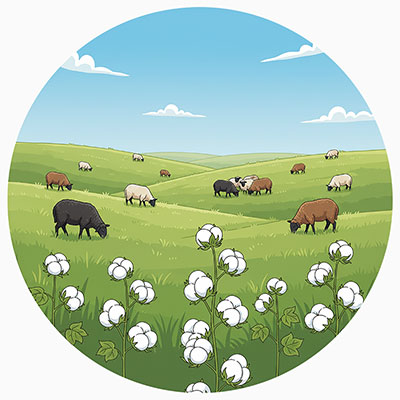
Introduction to Part 4 and Substitution with Sustainable Alternatives
In this section, we introduce Part 4 on substitution with different sustainable alternatives, focusing on key alternatives like organic cotton (examining its environmental and social footprint) and bio-based insulation derived from materials such as hemp and wool.
4.1 Introduction to Part 4: Substitution with Sustainable Alternatives
4.2 Organic Cotton: Farmers, Soils, and Water Resources
4.3 Hemp and Wool: Bio-Based Insulation Materials
Fungi Fighting Waste and Pollution, and Mushroom Computing
This section focuses on the innovative uses of fungi, from mushroom start-ups and advanced mushroom computing inspired by the ‘Wood Wide Web’, to mycoremediation (cleaning toxins and restoring environments).
4.4 Mushroom Start-Ups: Fungi Fighting Waste and Creating Sustainable Alternatives
4.5 Mushroom Computing: The Wood Wide Web and Fungi Tech Applications
4.6 Mushrooms Cleaning: Removing Toxins and Restoring Environments
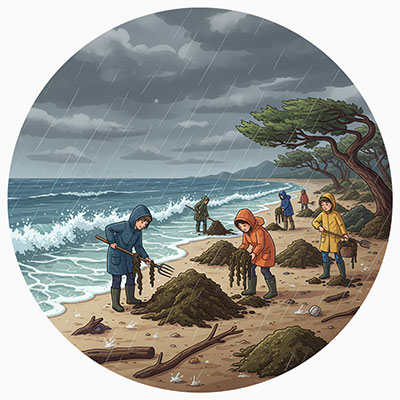
Algae and Seaweed as Biodegradable Plastics, Sargoblocks and Natural Fertilizers
For this section, we’ll get an overview of different algae-based plastics alternatives, the process of turning invasive seaweed into building bricks, and the use of kelp as a natural fertilizer.
4.7 Biodegradable Algae-Based Substitutions for Plastics
4.8 Bricks Made Out of Seaweed: Sargoblock Homes and Social Entreprenurship
4.9 Kelp as a Natural Fertilizer: Indigenous Knowledge and Practices
End of the Week Assignment
The assignment lets you explore and investigate a specific topic and place from a circularity perspective. This week’s assignment is focused on dyeing with natural materials.
4.10 Textile Dyeing with Natural Materials: Alternatives to Fossil Fuel-Based Pigments
Week 8
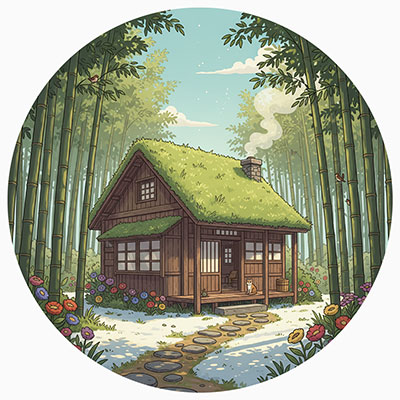
Woody Grasses, Straw Bales and Green Roofs Used in Construction and Materials Solutions
In this section, we will learn more about the diverse applications of bamboo, how a sustainable straw bale house is built, and how different types of green roofs address various sustainability challenges.
4.11 Sustainable Bamboo Uses: Buildings, Textiles, Food, and Plastic Replacement
4.12 Straw Bale Houses: Low-Cost and Carbon-Smart Homes
4.13 Green Roofs: Supporting Biodiversity, Communities and Climate Adaptation Efforts

Trees Turned into Textiles, Bioplastics from Forest Residues, and Biochar Reversed Coal Mining
In this section we’ll look at how to turn wood-based cellulose into long-lasting fabrics, the use of forest residues in making bioplastics, and the application of biochar as a soil improver and a technique for locking away carbon.
4.14 Turning Trees into Textiles: Cellulosic Fibres Becoming Long-Lasting Fabrics
4.15 Forest Residues Used in Making Bioplastics: Developing Sustainable Alternatives
4.16 Biochar: Reversed Coal Mining to Improve Soils and Locking Away Carbon
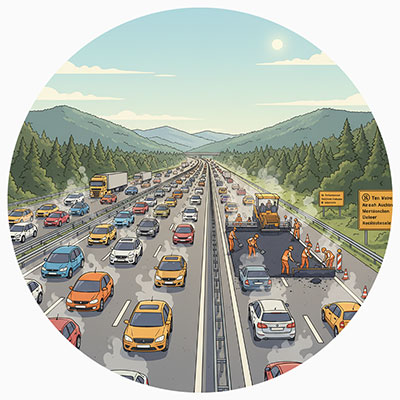
Rammed Earth Construction, SuperAdobe Houses and Permeable Street Surfaces
In this section we examine how locally sourced earth can replace concrete and cement in rammed earth construction in Nepal, how resilient SuperAdobe houses are built in California, and the advantages of more permeable street surfaces like pavements and asphalt roads.
4.17 Rammed Earth Houses: Alternatives to Concrete and Cement Construction
4.18 Earth Bag Architecture: Building Resilient and Affordable SuperAdobe Houses
4.19 Permeable Pavement and Porous Asphalt: Extreme Weather and Climate Adaptation
End of the Week Assignment
The assignment lets you explore and investigate a specific topic and place from a circularity perspective. This week we will focus on what we can learn from a specific time and place in history.
4.20 Sustainable Alternatives Time Machine: Finding Inspiration and Solutions from History