Part 1 | Part 2 | Part 3 | Part 4 | Part 5
Part 5: Conditions for Circular Systems and Economies
Week 9
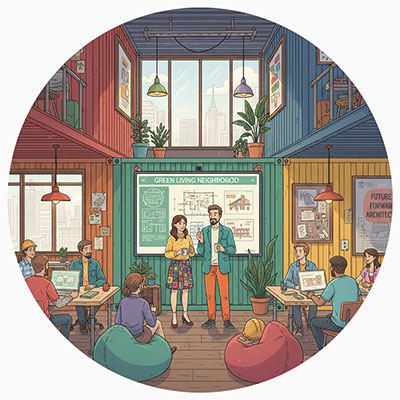
Introduction to Part 5 and Conditions for Circular Systems and Economies
In this section, we introduce Part 5, the final part of the course, and we’ll once again take a critical look at the circular economy and how transformative processes can create lasting and meaningful changes in society.
5.1 Introduction to Part 5: Conditions for Circular Systems and Economies
5.2 Three Inconvenient Truths about the Circular Economy
5.3 Change-Makers and Transformative Change Processes
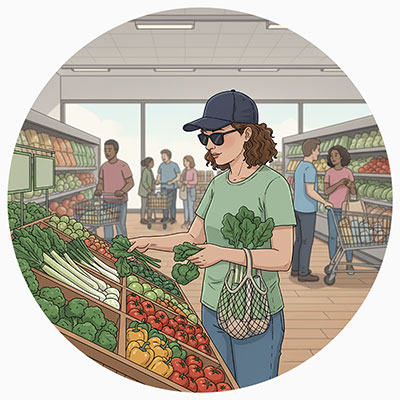
Governmental and International Policies: Remaking the Take-Make-Dispose Model
This section focuses on strategies that local and national governments, as well as international bodies, can use to limit the most damaging aspects of the linear, business-as-usual model and create better conditions for more circular initiatives.
5.4 Nudging and Consumer Incentives
5.5 Legislative Bans, Extended Producer Responsibility and Oiconomy Pricing
5.6 Financing Circularity: Taxation, Loans and Investments
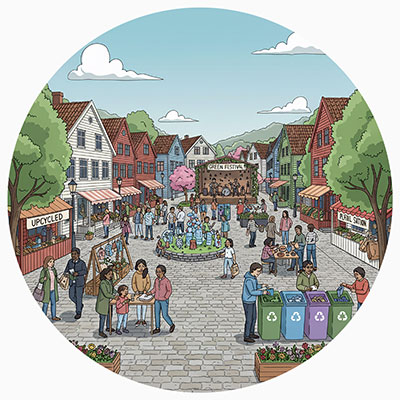
Reimagining Circularity Practices and Circular Economic Systems
In this section we’ll get an overview of how different societal actors and institutions can enable conditions and open up new spaces for circular communities, ideas, and businesses. We’ll also look at how a post-growth economic system could work with more circular practices.
5.7 Community, Culture and Art: Creative Circularity and Upcycling Festivals
5.8 Universities and Schools as Drivers for Change and Circularity
5.9 Post-Growth Economies for a Circular Society

End of the Week Assignment
The assignment lets you explore and investigate a specific topic and place from a circularity perspective. This week we encourage you to step outside and take a sensory walk that lets you map the positives and negatives of a specific place.
5.10 Sensory Walk: Green/Red Dot Investigation
Week 10
Finalizing Your Circular Portfolio, Course Conclusion and Next Steps
In this final part of the course, you will finalize your circular portfolio, identify opportunities for sharing your work, and define key action items and next steps for your continued journey.
5.11 Put Together and Finalize Your Circular Course Portfolio
5.12 Share and Get Feedback on Your Portfolio
5.13 Review, Reflect and Update Your Course Portfolio
5.14 Next Steps On Your Circularity Journey and Course Survey