Part 1 | Part 2 | Part 3 | Part 4 | Part 5
5.1
Introduction to Part 5: Conditions for Circular Systems and Economies
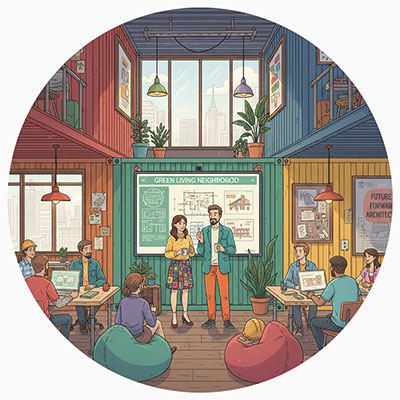
Part 5 of the course shifts focus from specific material substitutions to the systemic conditions, economic frameworks, and institutional drivers that make circularity possible. Over the final two weeks, we examine how social structures and new economic models can move us beyond linear paradigms.
Week 9 introduces the final part of the course by taking a critical look at the conditions required for a circular transition. We begin with Three Inconvenient Truths about the Circular Economy and an exploration of Change-Makers and Transformative Change Processes, identifying how meaningful societal shifts actually occur. The second section focuses on Governmental and International Policies, where we examine strategies to replace the take-make-dispose model through Nudging, Legislative Bans, Extended Producer Responsibility, and Oiconomy Pricing. We also look at the financial side, covering Circular Taxation, Loans, and Investments. In the final section, we move into Reimagining Circularity Practices, exploring how Community, Culture, and Art can open new spaces for circularity, the role of Universities as Drivers for Change, and the framework of Post-Growth Economies. The week concludes with the End of the Week Assignment: Sensory Walk, a practical investigation where you will map the sensory positives and negatives of a specific local environment.
Week 10 focuses on the synthesis and application of everything you have learned throughout the course. In this final stage, you will focus on Finalizing Your Circular Portfolio, a comprehensive collection of your work and insights. The process begins with Sharing and Getting Feedback, allowing you to refine your ideas through peer review and collaborative critique. You will then engage in a Review and Reflection to update your findings and Outline Action Items, translating theoretical knowledge into a personal roadmap for future practice. The course concludes with Next Steps and a Take-Home Message, providing the final tools and momentum needed to continue your journey as a leader in the transition toward a circular and sustainable society.
© Daniel Mossberg, CEMUS, Uppsala University and Sonali Phadke, studio Alternatives and Stephanie Foote