
In July the B-MOVE ENLIGHT project invited PhD-students to Ghent to take part in the interdisciplinary summer school on Plant Humanities. The programme was facilitated by Elly McCausland, Associate Professor of English Literature at Ghent University, and part of the B-MOVE core team.
The CEMUS delegation included PhD-students Azril Bacal and Teresa Sarasa Nagore.
“B-MOVE: Beyond Migration: Organisms, Matter, Voices, Ecologies” is an ENLIGHT Thematic Network (ETN), part of the wider ENLIGHT university network. B-MOVE brings together students, researchers, and educators to explore migration and mobility beyond human-centred perspectives, connecting ecological processes with cultural and creative practices.

ENLIGHT is a European university network to promote equality, increased quality of life, sustainability, and global engagement through higher education.
Funded by the European Union. Views and opinions expressed are however those of the author(s) only and do not necessarily reflect those of the European Union or the European Education and Culture Executive Agency. Neither the European Union nor the granting authority can be held responsible for them.
Plants are good for thinkingClaude Levi-Strauss
Do you notice plants in your daily life? For many of us, plants become part of the blurry, green backdrop to our lives, a phenomenon Wandersee and Schussler (1999) coined “plant blindness”. During 4 days at the University of Ghent, Belgium, Azril and Teresa took part in the Plant Humanities Summer School, where they learned to see plants and our interactions with them, uncovering how humans are partly vegetal, too.
 Thanks to the EU funded B-ENLIGHT project, of which CEMUS is a part of, Azril (PhD candidate at the Universidad de Cordoba) and Teresa (PhD student at the Swedish University of Agricultural Sciences) made their way to Ghent to mingle with fellow PhDs in the humanities and social sciences, artists, academics and the flora of the city. In this blogpost, we (Azril and Teresa) reflect on their experiences as part of this summer school, and share with you some of their highlights. To provide an overview statement and mildly stated, during this 4-days course, We experienced an intense immersion into the tangled roots of the Plant World, expanding our perception of the wondrous world we live in. As Kenneth Boulding (1956) wrote, a change of image is bound to be reflected in changes in our attitudes and ways to relate; changing ways of seeing plants changes how we move about the world , of which plants are our companions and makers. This summer school illustrates the potential of transformative research and education (Bacal, 2022).
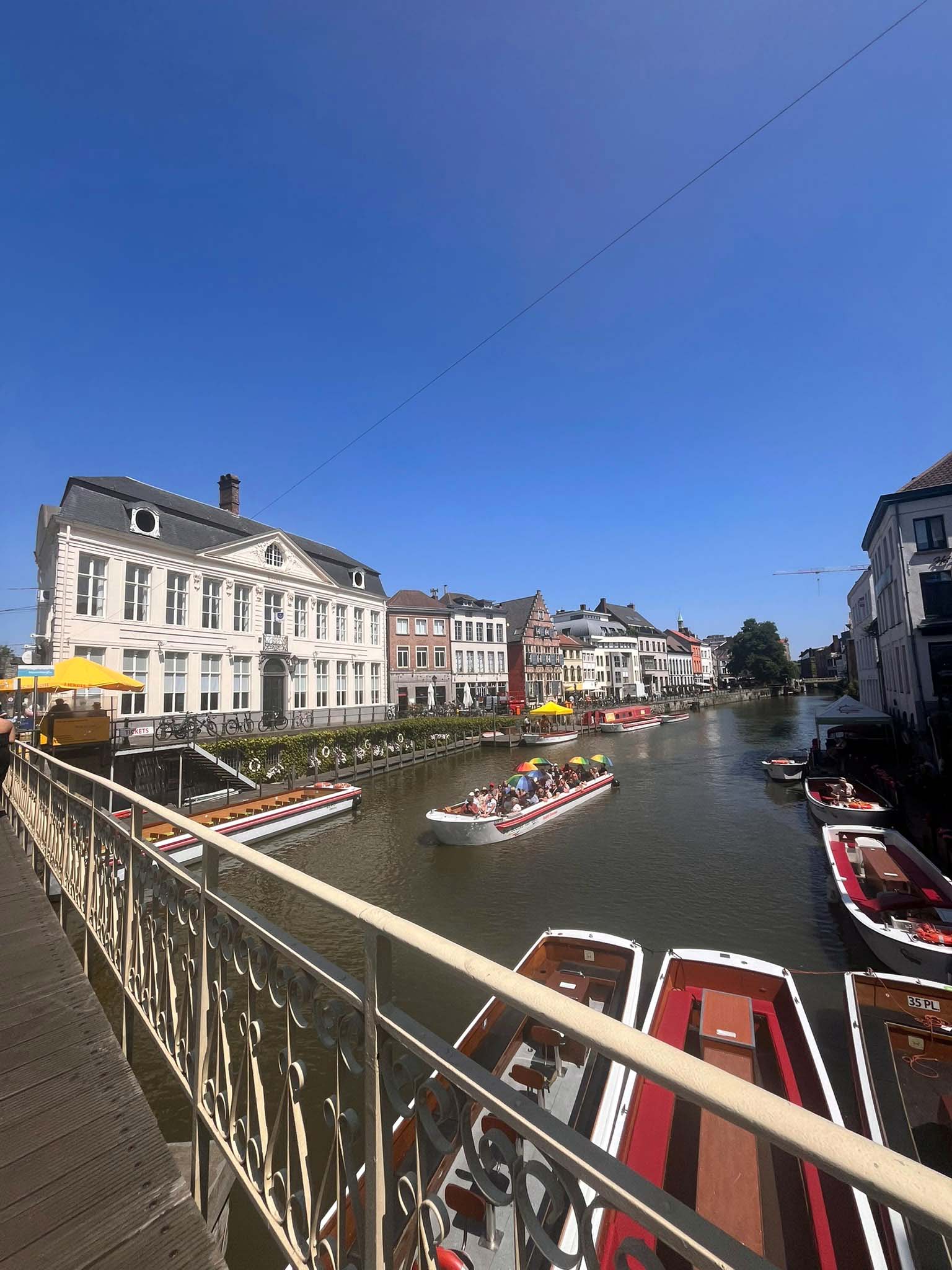
Day 1 started strong with a lecture and welcome from course organizer Elly McCausland, who posed the thesis that we live in a time of “botanical urgency”. Melanie Duckworth’s presentation on indigenous poetry and Nele Möller’s work on spruce-listening in the midst of ecological collapse and anthropogenic climate change brought to the fore this urgency through artful methods; we discussed how poetry and soundscapes present opportunities to listen and tend to, learn and nurture plant lives. We also explored Ghent by foot, and in a most unusual manner, navigating the city, visiting secret gardens and the stories of industrialization, marginalization, religion and conflict which these green spaces cause and co-construct. The scorching heat in cobblestone streets and the sticky sweetness of surprisingly ripe figs at St Peter’s Abbey were a recurrent reminder of the climatic urgency we (both humans and non-human peoples) find ourselves in.
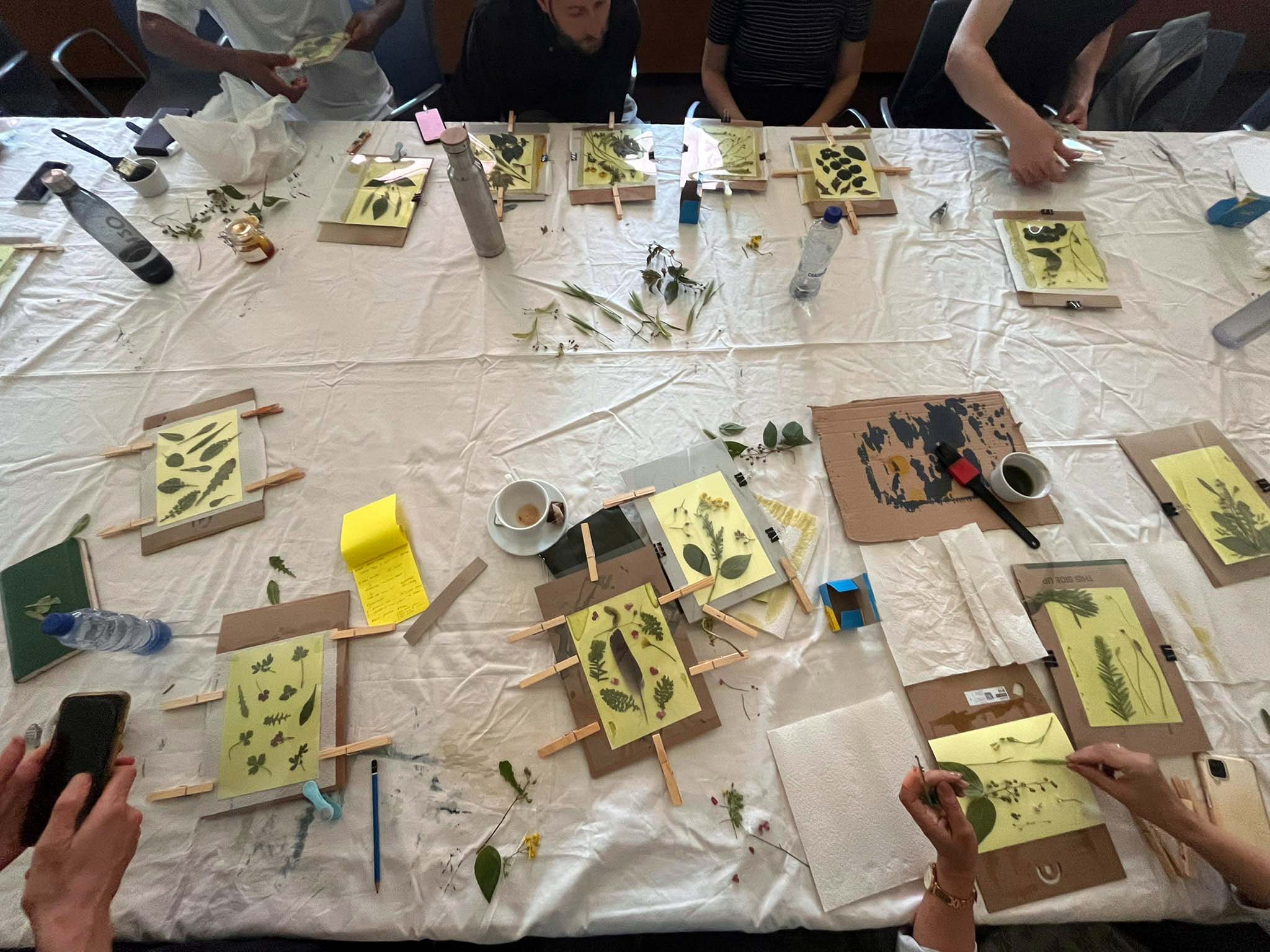 Day two got our creative juices flowing, hearing from academics and artists that have developed artistic practices with plants. We heard from people working on photography (Epha Roe), paper-making (Barbara Mydlak), food as ceremony and historical remembrance (Cleo Foole). Lastly, we all got to have a go at creating art with plants through sustainable photography methods of Anthotypy and Cyanotype print making.
We experimented with different plant materials (matcha, beetroot, nettles) as well as chemical compounds and the sun, collaborating in an artistic practice which was first developed nearly 200 years ago.
On day three we turned to language, and how although our vernacular has historically been limited in tending to the connection between plants and humans -relying on incomplete metaphors or historic disinterest- creative writing can aid translating the gap between human and more-than. We enjoyed a poetry reading and workshop by French poet Thubault Marthouret. We also got to write in this session some poetry and/or prose of our own from the perspective of a plant, where Azril wrote the following (updated July 26, Uppsala):
Some people, animals, birds and plants love trees. Some people and companies don’t. There was an Old Tree standing in front of my eyes early in the morning when sitting at my kitchen table sipping my coffee and greeting the new day. There it was the old tree always standing in front of my eyes through a large window devoid of curtains. But alas! One fateful morning the old tree was no longer! It was gone, suddenly gone! The old tree that became my friend and kept me company for countless decades was gone! It was gone like many of my old friends gone, gone dead, as the life cycle obliges. A deep feeling of loss anyway! But had the old tree gone out of old age? Not so! The old tree did not die of natural death. It was not a case of disease caused by insects, fungus or virus. In time we found out that it was the case of a man-made destruction of a defenless tree. It was the case of Uppsalahem, the municipal enterprise that runs business according to the iron law of market fundamentalism, our apartments and surrounding trees and landscape. They were the culprits! They cut the old tree down! They murdered the old tree that had kept me company for so long. I felt the loss, the grief as well as a strong sense of indignation witnessing the impunity of this company’s treecide! Yet one day the cry of the dying tree appeared in the dreams of neighboring people who love trees and suddenly started a movement hugging trees and struggling against lodgers for environmental justice. And yet another day a black crow surprised me sitting on the mutilated trunk of the Old Tree. He looked straight into my eyes and silently told me that he also missed his wise grandfather, the Old Tree.
Some people, animals, birds and plants love trees. Some people and companies don’t. There was an Old Tree standing in front of my eyes early in the morning when sitting at my kitchen table sipping my coffee and greeting the new day. There it was the old tree always standing in front of my eyes through a large window devoid of curtains. But alas! One fateful morning the old tree was no longer! It was gone, suddenly gone! The old tree that became my friend and kept me company for countless decades was gone! It was gone like many of my old friends gone, gone dead, as the life cycle obliges. A deep feeling of loss anyway! But had the old tree gone out of old age? Not so! The old tree did not die of natural death. It was not a case of disease caused by insects, fungus or virus. In time we found out that it was the case of a man-made destruction of a defenless tree. It was the case of Uppsalahem, the municipal enterprise that runs business according to the iron law of market fundamentalism, our apartments and surrounding trees and landscape. They were the culprits! They cut the old tree down! They murdered the old tree that had kept me company for so long. I felt the loss, the grief as well as a strong sense of indignation witnessing the impunity of this company’s treecide! Yet one day the cry of the dying tree appeared in the dreams of neighboring people who love trees and suddenly started a movement hugging trees and struggling against lodgers for environmental justice. And yet another day a black crow surprised me sitting on the mutilated trunk of the Old Tree. He looked straight into my eyes and silently told me that he also missed his wise grandfather, the Old Tree.
 Leanne Rae Darnbrough’s exploration of 19th century literature on plants, sex and erotica, exploring how gender, death, colonialism and the macabre took root in European literature of the time. Olivier Leroux provided some scientific perspectives on plant intelligence, bringing into question long-held beliefs of what constitutes intelligence and reinstating that plants are in fact worthy of our attention and respect, exhibiting intelligence in several fascinating ways. This presentation was packed with information in too short a time. It might have deserved more time. Lastly, Elly McCausland brought us back to literature, most specifically to the concept of “plant horror”. We discussed how plants have haunted our nightmares and horror stories in popular culture. This genre might reflect our guilt because of our mistreatment of Plants, thereby fearing their vengeance.
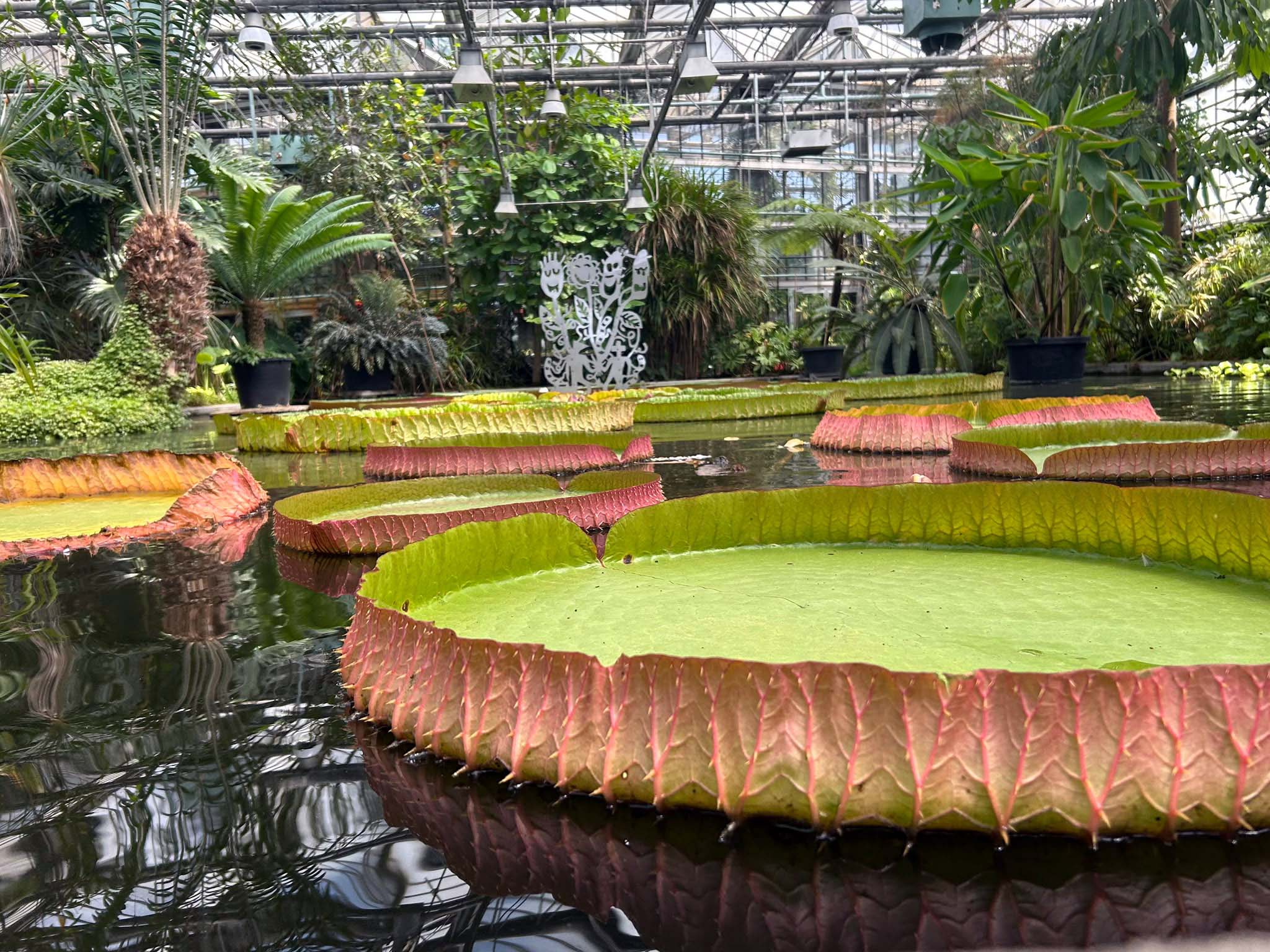
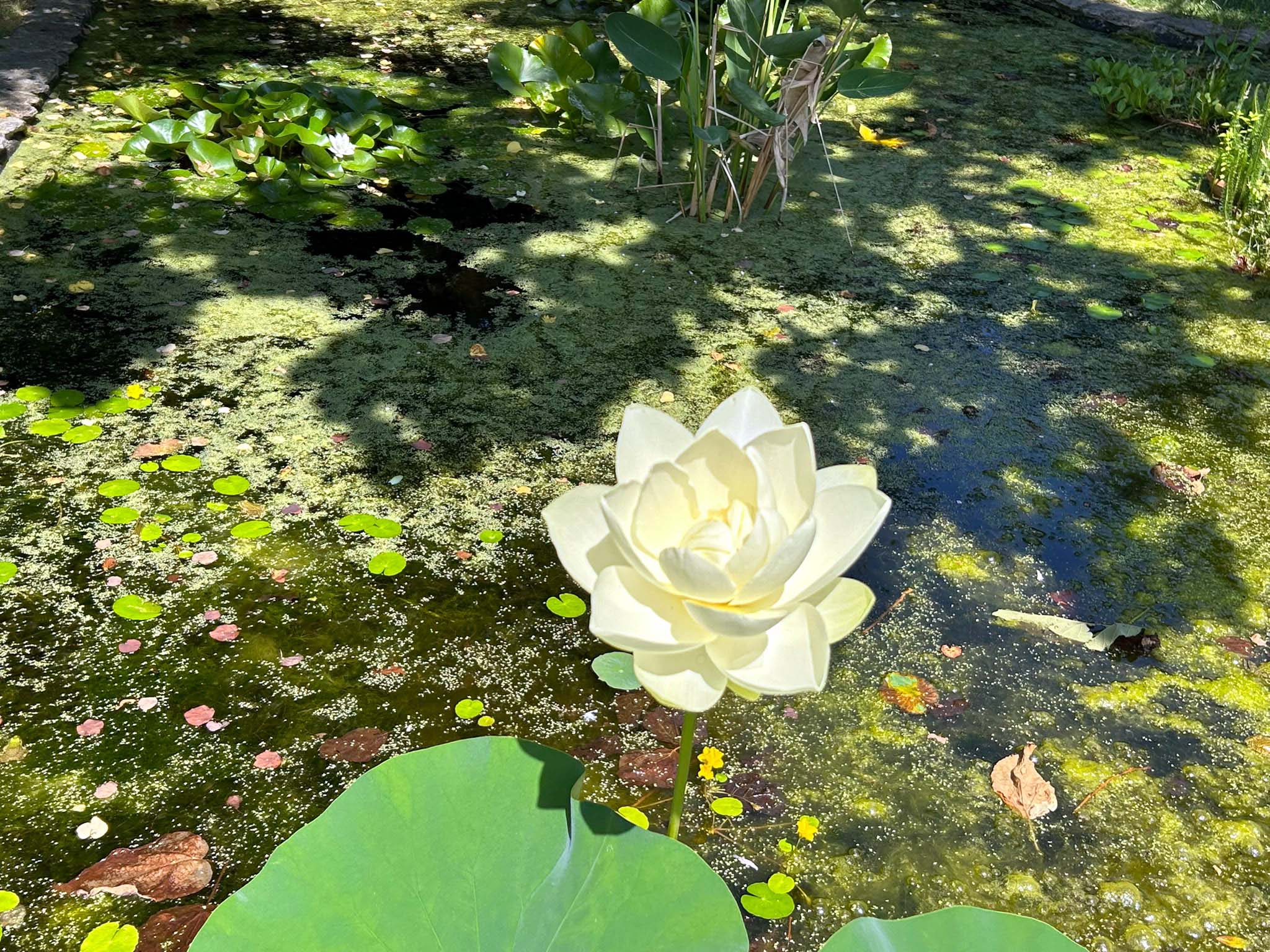
For our final day, we continued this exploration of our plant companions through video games (Marco Caracciolo) and taking a critical look at the spices in our pantry, and how these are deeply tied to histories of colonialism and geopolitics between Sri Lanka and globalized food systems (Ella Brolly). Elly made a banana bread filled with spices, making something so delicious and so deceivingly political. We finalized the summer school with a walk in the Ghent Botanical gardens, where we actually “met” many of the plants we had been reading and thinking about. Seeing the great diversity and history of this place, we were driven by awe and admiration of our plant kin, and a similar feeling of enchantment towards the people who made this summer school possible. Our guide at the botanical garden incarnated the joy and wisdom of living in nature.
References
Bacal, A. (2022). Editor. Transformative Research and Higher Education. London: Emerald publishers.
Boulding, K.E., (1956). The Image: Knowledge in Life and Society. Ann Arbor Paperbacks
Lévi-Strauss, C. (1971). Totemism (No. 157). Beacon Press.
Wandersee, J. H., & Schussler, E. E. (1999). Preventing plant blindness. The American biology teacher, 61(2), 82-86.
Note: More references are available upon request by interested readers. Just as us about a growing literature on this and related issues.