What stays with you after studying at CEMUS? This year, we carried out an Alumni Survey to learn more about the long-term impact of CEMUS. During 2025–2026, 194 former students and course coordinators completed the CEMUS Alumni Survey. The aim was to understand where they have ended up and how their experiences at CEMUS have influenced their careers and lives, if at all.
This blog post presents some preliminary conclusions from the survey. A final report will be published soon.
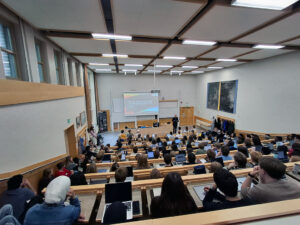
Image from CEMUS intro lecture, autumn 2026
Seeing Connections
One of the strongest themes in the responses is systems thinking and critical thinking.
Alumni describe learning to look at sustainability from different perspectives, to see connections between ecological, social and economic issues, and to become more comfortable with complexity.
CEMUS’ interdisciplinary approach is often described as especially valuable. Working with people from different academic and cultural backgrounds helped many respondents see that difficult problems rarely have simple solutions.
When asked which parts of their CEMUS experience they still use today, 142 respondents selected knowledge of sustainability issues and 122 selected understanding of systems and interconnections. Communication and facilitation, teamwork, future-oriented thinking, and the ability to deal with complex sustainability challenges were also common answers.
Agency
Another recurring theme is agency – a sense that it is possible to create change.
Some alumni describe CEMUS as an important influence on their choice of further studies or career. Others say it helped them see how sustainability could become part of a profession they were already pursuing.
On a scale from 1 to 5, where 1 means “not at all” and 5 means “to a high degree”, the average response to whether CEMUS had influenced career direction or choices was 3.7. In the open responses, alumni describe applying for sustainability-related jobs, changing study paths, continuing into research, or realizing that they wanted their work to contribute to something meaningful.
Skills that are useful in many professions
Many alumni highlight skills that are useful whether or not they later chose to work directly with sustainability. These include project management, communication, facilitation, teamwork, teaching, and working across disciplines.
In the survey, 93 respondents said they still use interpersonal and teamwork skills from their CEMUS experience, 92 selected communication and facilitation, and 86 selected project planning and management.
Former course coordinators especially describe gaining confidence from being trusted with real responsibility, such as designing courses, facilitating discussions, speaking in front of groups, and coordinating projects. Several say these experiences later became important their professional roles.
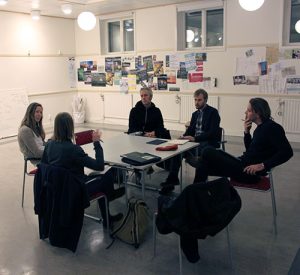
Image from workshopping in Kollaboratoriet – a collaborative space in Uppsala
A different experience of education
The way learning took place at CEMUS was also important. Alumni remember seminars, projects, discussions, creative assignments, and student-led learning. Several say this changed their view of what education could be. Some respondents say the student-led approach made them more willing to question hierarchies, trust their own knowledge, and create space for others to contribute.
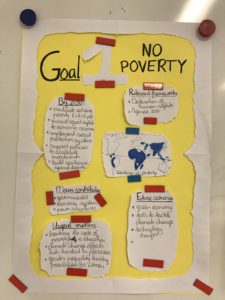
Student poster
Not a direct route to a specific job
The survey also includes some critical views. Some respondents felt that CEMUS did not provide enough of the specific technical skills that certain employers look for, such as carbon accounting or environmental law. This is an important point, and we will explore it further in the final Alumni Survey report. It is also clear that CEMUS has affected people in different ways, and that our main purpose is not to provide vocational training for one specific profession.
These are preliminary findings, but the answers show an emerging pattern. CEMUS does not only give students tools to understand sustainability challenges. For many, it also gives them ways to keep engaging with those challenges – in their work and in their lives.
A more in-depth report on the CEMUS Alumni Survey will be published soon.